
Don’t eat the peppered snow!
See that pristine white snow? It’s so beautiful: clean, crisp, and pure. But look closely on a lovely sunny day, particularly near tree trunks, and you may be surprised by what is there. It looks like pepper has been sprinkled all around. Wait, are those black specks MOVING? What the heck is going on here?
You’re looking at snow fleas, or springtails as they’re also called. They’re dark blue-black and are about 1.5 mm long, resembling tiny earwigs. About 40 of them would fit on your thumbnail.
In the summer these little creatures live in the ground, feeding on organic matter, and helping to enrich the soil. Over the winter they live in leaf litter, coming out on sunny days to feed on algae and fungus that grows on the snow. Yikes, that’s one good reason not to eat snow!
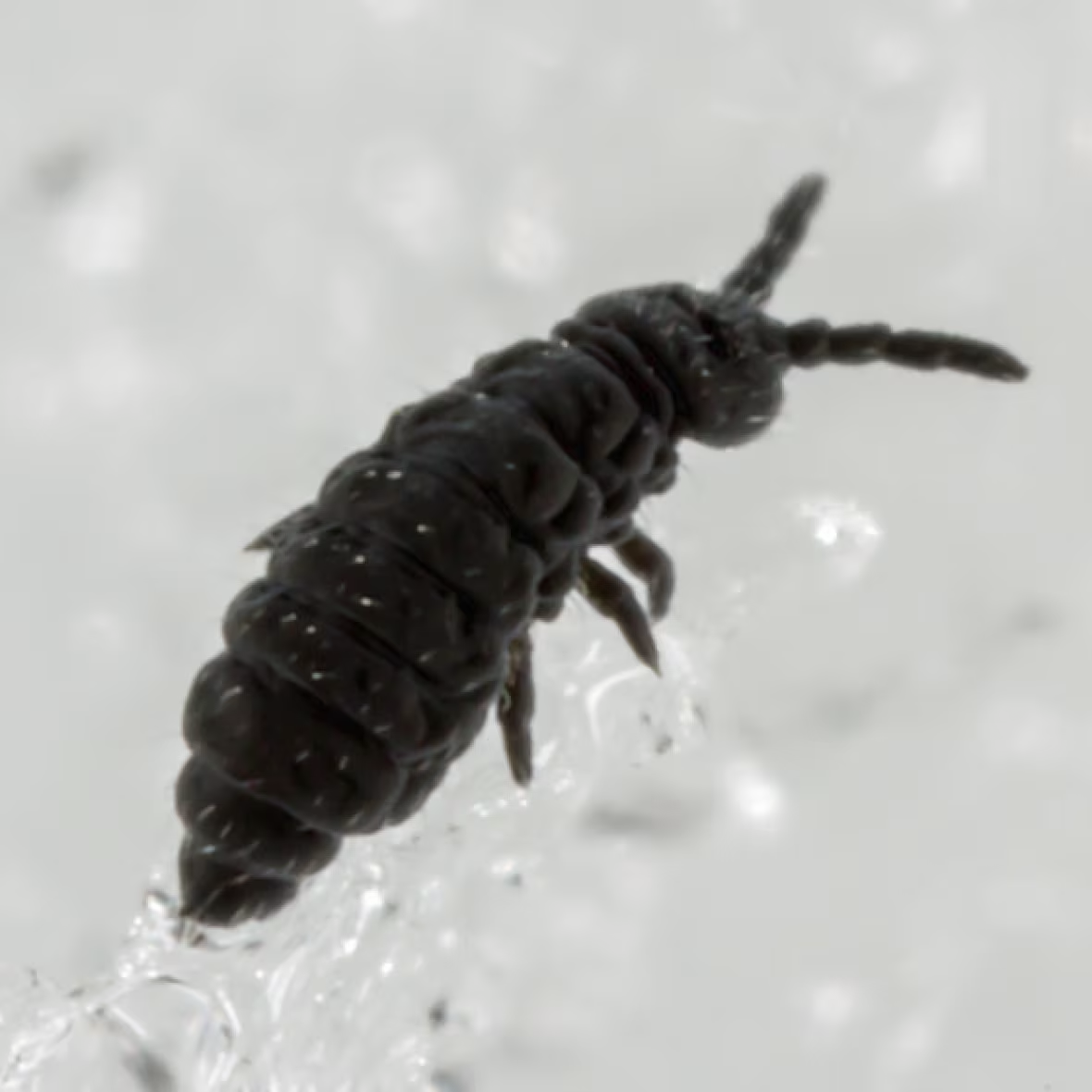
Snow fleas are hexapods, a kind of arthropod, and so are cousins of lobsters, insects, and spiders. They’re called “fleas” due to the way they jump, like those pesky insects that are found on pets. Snow fleas have a stiff, hinged appendage, called a furcula, on their undersides. This is the “spring” of the springtail. When it’s released it launches them up to 18 cm! That’s the equivalent of a 1.75m tall human jumping over 200 metres! That’s impressive!
However, there’s no need to fear snow fleas. They don’t bite, don’t carry disease, and won’t hurt pets or wild animals. They’re beneficial creatures that make gardens grow better by breaking down organic matter. Their ability to survive freezing temperatures is interesting to researchers at Queen’s University and may be used to make better ice cream. Now that’s a frozen treat that IS good to eat!
Nancy Melcher is The Nature Nut. Send details of your sightings or questions about the natural world to: general@melcher.cx