
The Bard of the Yukon
“There are strange things done in the midnight sun by the men who moil for gold…”
If you’re not already aware, this year marks the 150th birthday (in November) of one of Canada’s most beloved authors, and one who lived in Leaskdale for a key 15-year period in her career: Lucy Maud Montgomery.
Coincidentally, another writer, best known for the work he did in Canada, although he was born in England, raised in Scotland, and lived much of his life in France and Monaco, is also celebrating his sesquicentennial this year. Next week, in fact. And though he and Maud likely never met (although he did live in Toronto briefly in 1912-13), they were almost certainly aware of each other, since they were among the country’s most celebrated literary figures in the early part of the 20th century. He published his best-known book in 1906, she in 1908.
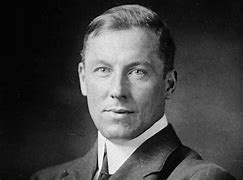
And although this other writer played no part in Uxbridge’s history, he had a huge role in mine. The fellow’s name is Robert William Service. Although he wrote a bit of fiction, even a non-fiction fitness book, his reputation, and his publishing success, were built on his dramatic poetry. You might recognize the lines at the top of this column as being the opening of one of his most popular pieces, The Cremation of Sam McGee, which is set in the Yukon during the years following the Klondike Gold Rush. And that’s where and when Service wrote it, while he was working as a bank teller in Whitehorse in 1905.
The bestselling single book of poetry in Canadian literary history was the slim volume Service published while he was volunteering as an ambulance driver on the front lines of the First World War (a job he shared with Ernest Hemingway and A.Y. Jackson, among others). It’s called Rhymes of a Red Cross Man, and just about every soldier in the trenches had one in his backpack. Of course, Canada’s best-known poem from that war, In Flanders Fields, was also written by a medical man, and it would be surprising if Service didn’t encounter John McCrae at some point in the chaos of the conflict.
But as popular as Service’s war poems were at the time, and as powerful as they still are today (I did a play based on them at the Uxbridge Museum a few years ago), Service is best remembered for his Yukon ballads. I first encountered The Cremation in a junior high English class, but I promptly forgot about him until about a dozen years later. It’s the summer of 1977, and I’m working in the small northwest Alberta town of Grande Prairie, which just happens to be on the bottom end of the Alaska Highway. We’d never been north of 60, so a bunch of us jump into my little red Toyota and go on a road trip. On our way to Alaska, we stop in Whitehorse and take in a Gold Rush style vaudeville revue called the Frantic Follies. Wow. Singing, dancing, silliness, and a lot of Robert Service.
If you know me, you can predict what came next. I arranged an audition in Edmonton, where I had to sing, play my trumpet and recite another of Service’s classics, The Shooting of Dan McGrew. The following spring, I quit my job and headed north for a three-month run of the Follies (with no clear idea of what would follow). Every night, I took part in a dramatization of Sam McGee (as the frozen corpse), as well as doing a solo recitation of Blasphemous Bill, still one of my favourites. It led not only to settling in the Yukon and becoming a true sourdough, but to performing Service just about everywhere, from a cruise ship to an Arizona RV park to a classroom in the bard’s native Scotland.
The highlight was two summers, 1984 and 1985, working for Parks Canada as the interpreter at Service’s own cabin on Eighth Avenue in Dawson City. Twice a day, I did an hour-long programme for tourists, all the hits plus whatever the audience wanted to hear (over the two summers, I recited more than 200 different poems!). The second summer was Parks Canada’s centennial, and they brought in special guests. One day, gold rush historian Pierre Berton (who grew up in Dawson), showed up, and we recited The Spell of the Yukon together.
Service had a fascinating life – Google him sometime. And after almost 50 years of reciting his work, it’s still some of the richest material I’ve worked with. The guy just had a way with words. So here’s to you, Robert. And stay tuned, gentle readers. Some time this year, I’ll do a show of some of his best stuff up in Leaskdale. And dedicate the proceeds to his birthday twin, Lucy Maud.